External Antennas for LTE and 5G Gateways: When and How
The single most effective upgrade for a struggling cellular gateway is moving the antennas — not replacing the gateway. Metal buildings, low-e glass, and basement equipment rooms can knock 20 dB off a signal that is perfectly usable at the roofline.
Match the antenna to the problem
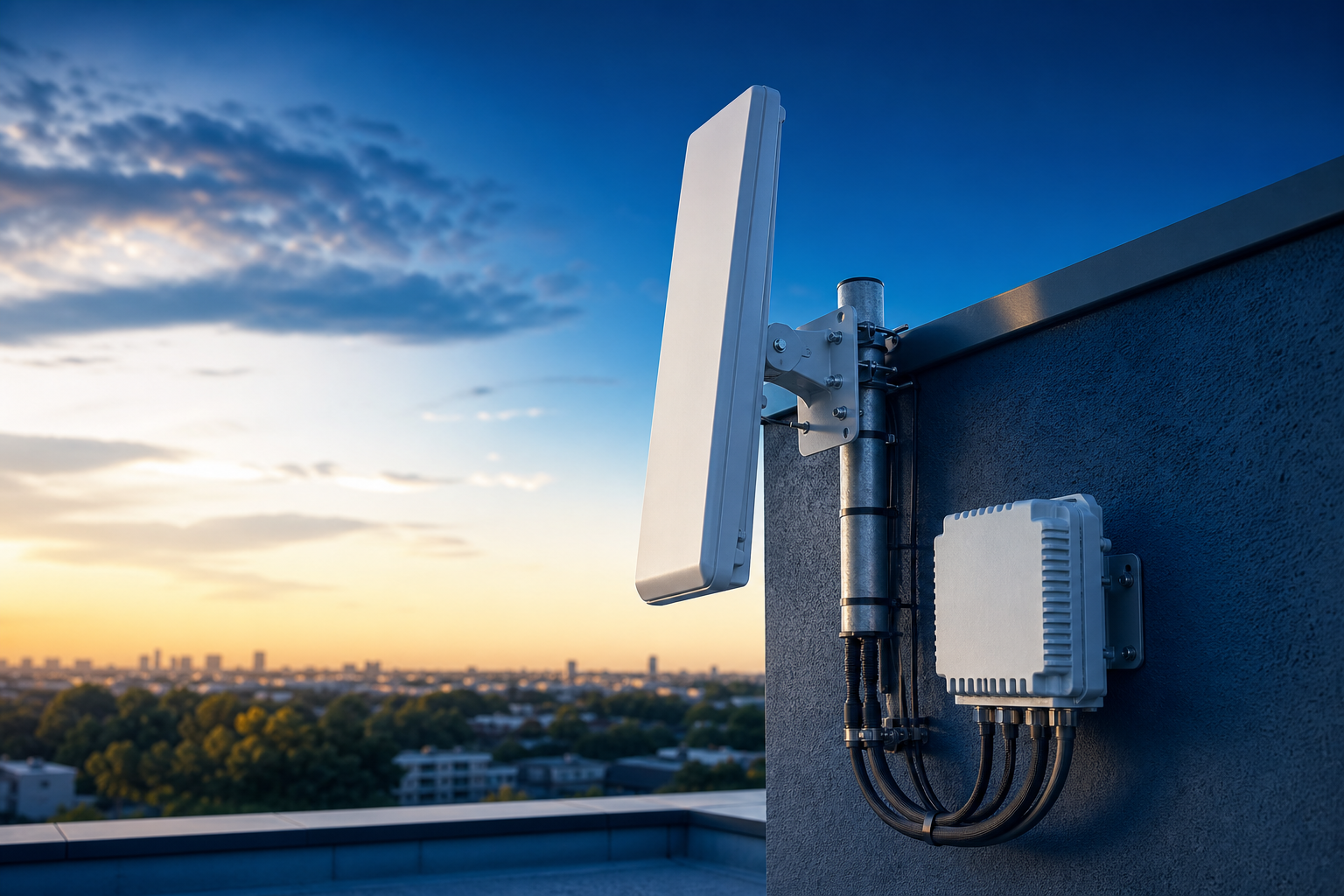
Omnidirectional antennas suit sites with towers in multiple directions or unknown carrier plans. Directional (panel or yagi) antennas add gain toward a specific tower and reject interference from elsewhere — ideal for fringe coverage. For MIMO gateways, install antennas in matched pairs or quads with the spacing and cross-polarization the manufacturer specifies.
Respect cable loss
Coax loss eats antenna gain fast, especially at 3.5 GHz C-Band frequencies. Keep runs short, use low-loss cable rated for the band, and torque connectors properly with weatherproofing on outdoor joints. A high-gain antenna on 75 feet of thin coax often performs worse than a modest antenna on 20 feet of good cable.
Validate with metrics, not bars
Compare RSRP and SINR before and after every change, one variable at a time. Gateways with SMA ports — including the XC46BE — make external antenna upgrades a bolt-on project rather than a redesign.